Introduction: Is Your IPTV Streaming Experience Truly Flawless in 2025?
Is your IPTV streaming experience truly delivering smooth, buffer-free quality in 2025? If you’re tired of endless buffering, frozen channels, or pixelated video quality, you’re not alone. Millions of viewers worldwide are making the switch to IPTV streaming services, yet many struggle with subpar performance that undermines the entire viewing experience.
The frustration is real. You’ve cut the cord from expensive cable packages, invested in a streaming setup, only to face constant interruptions during your favorite live sports events or movie marathons. Channel freezing at critical moments, audio that doesn’t sync with video, and sudden quality drops can transform what should be entertainment into a technical nightmare.
But here’s the good news: achieving flawless IPTV streaming in 2025 isn’t just possible—it’s completely achievable when you understand the right optimization techniques. According to recent industry data, the global IPTV market is projected to reach $194 billion by 2025, with over 3.5 billion users worldwide embracing this technology. This explosive growth reflects a fundamental shift away from traditional cable and satellite TV toward more flexible, cost-effective streaming solutions.
In this comprehensive guide, we’ll unlock nine powerful secrets that separate frustrating IPTV experiences from seamless, high-definition viewing. Whether you’re a complete beginner exploring your first IPTV service or an experienced streamer looking to optimize performance, you’ll discover actionable strategies to transform your streaming quality immediately.
What Is IPTV Streaming and Why It’s Exploding in 2025
IPTV streaming stands for Internet Protocol Television streaming—a revolutionary technology that delivers television content through internet connections rather than traditional cable, satellite, or antenna systems. Unlike conventional broadcasting methods that transmit signals through satellites or cable infrastructure, IPTV streaming uses your existing internet connection to send TV channels, movies, and shows directly to your devices.
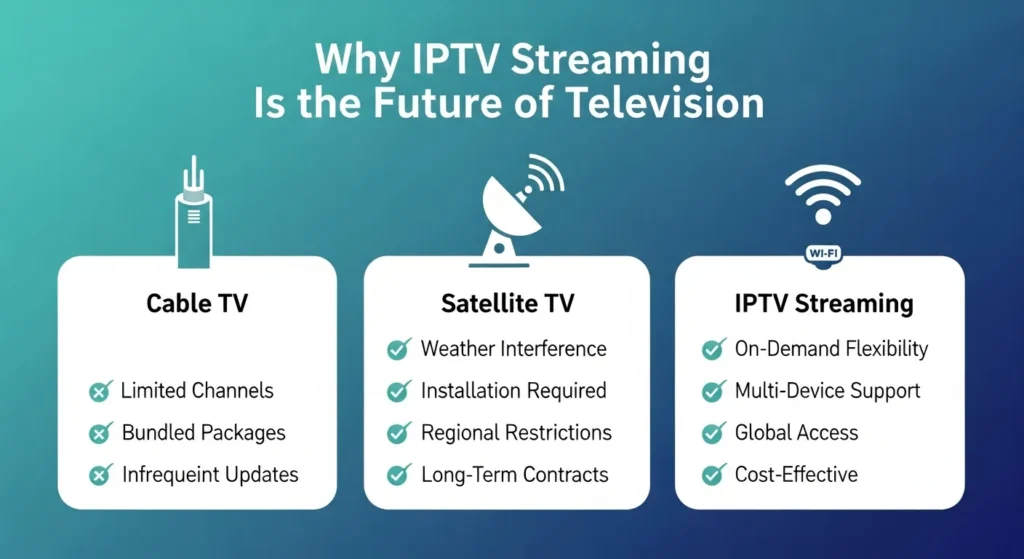
The fundamental difference lies in content delivery. Traditional cable TV broadcasts all channels simultaneously, whether you watch them or not. IPTV streaming, however, operates on-demand—delivering only the specific content you request when you request it. This efficiency creates a personalized viewing experience that traditional methods simply cannot match.
Think of it this way: cable TV is like a newspaper delivered to your door containing every section whether you read them or not. IPTV streaming is like accessing exactly the articles you want, whenever you want them, on any device you choose.
The explosion of IPTV adoption in 2025 isn’t accidental. Several converging factors are driving this transformation. First, internet infrastructure has dramatically improved globally, with average speeds now exceeding 100 Mbps in developed nations. Second, viewers increasingly demand flexibility—the ability to watch content across smartphones, tablets, smart TVs, and computers seamlessly. Third, the cost differential is compelling. While cable subscriptions often exceed $100 monthly, quality IPTV services deliver comparable or superior content for a fraction of that price.
Market research indicates that traditional cable TV subscriptions have declined by over 30% in the past five years, while IPTV service adoption has surged correspondingly. This isn’t just a trend—it represents a fundamental restructuring of how we consume television content in the digital age.
How IPTV Streaming Works: Simple Technology Explained
Understanding how IPTV streaming operates demystifies the technology and helps you optimize your setup effectively. The process involves several key stages that work seamlessly together to deliver content to your screen.
Step 1: Content Source
Everything begins with the content source—live TV channels, pre-recorded shows, movies, or sports events. IPTV providers obtain broadcasting rights from content creators, networks, or distributors to legally stream this content to subscribers.
Step 2: Encoding and Compression
Raw video files are enormous. A single hour of uncompressed 4K video could exceed 1 terabyte. The encoding stage compresses this content using codecs like H.264 or H.265 (HEVC) without significantly sacrificing quality. This compression makes streaming practical over standard internet connections.
Step 3: Streaming Server Infrastructure
Encoded content is stored on powerful streaming servers. These servers use Content Delivery Networks (CDNs) strategically positioned globally to reduce latency and ensure smooth delivery. When you request a channel or show, the nearest server responds, minimizing delay.
Step 4: Streaming Protocol Transmission
The content travels from server to your device using specialized streaming protocols. The most common protocols include:
- HLS streaming (HTTP Live Streaming): Developed by Apple, HLS breaks video into small segments delivered via standard HTTP protocols. It’s highly compatible across devices and automatically adjusts quality based on your internet speed.
- RTMP streaming (Real-Time Messaging Protocol): Originally developed by Adobe, RTMP excels at low-latency live streaming, making it ideal for sports and news broadcasts.
- UDP (User Datagram Protocol): Often used for live IPTV streaming where speed matters more than perfect packet delivery, UDP minimizes buffering but may occasionally sacrifice minor quality if network conditions deteriorate.
Step 5: IPTV Player and Decoding
Your IPTV player or IPTV app receives the stream, decodes the compressed video, and displays it on your screen. Popular IPTV players include VLC Media Player, Perfect Player, IPTV Smarters Pro, and Kodi. These applications interpret M3U playlists—simple text files containing channel URLs and metadata that tell your player where to find each stream.
The entire process, from your channel selection to video appearing on screen, happens in milliseconds when properly optimized. This seamless coordination between encoding, transmission, and decoding creates the buffer-free streaming experience viewers expect in 2025.
Top Benefits of IPTV Streaming Over Traditional TV
IPTV streaming offers compelling advantages that explain why millions are abandoning traditional television services. These benefits extend far beyond simple cost savings, fundamentally transforming how we interact with television content.
On-Demand Flexibility and Control
Traditional TV operates on fixed schedules determined by broadcasters. Miss your favorite show’s airtime? You’re out of luck unless you recorded it. IPTV streaming eliminates this constraint entirely. Video on demand (VOD) libraries let you watch what you want, when you want, pausing and resuming across different devices seamlessly. Catch-up TV features even let you replay live broadcasts you missed, typically for 7-14 days after original airing.
Global Channel Access Without Geographic Limits
Cable and satellite services restrict you to regional channels based on your physical location. IPTV streaming transcends these geographic boundaries. International news from BBC, sports from European leagues, Asian entertainment channels—all become accessible from a single subscription. This global reach particularly benefits expatriates, multilingual families, and international content enthusiasts.
Significant Cost Savings
The financial advantage is substantial. Average cable TV bills in the United States exceed $120 monthly and continue rising annually. Quality IPTV services typically range from $10 to $50 monthly, depending on channel selection and features. Even premium IPTV subscriptions with thousands of channels, comprehensive sports packages, and extensive VOD libraries rarely exceed $60 monthly—nearly 50% less than equivalent cable offerings.
Multi-Device Compatibility and Portability
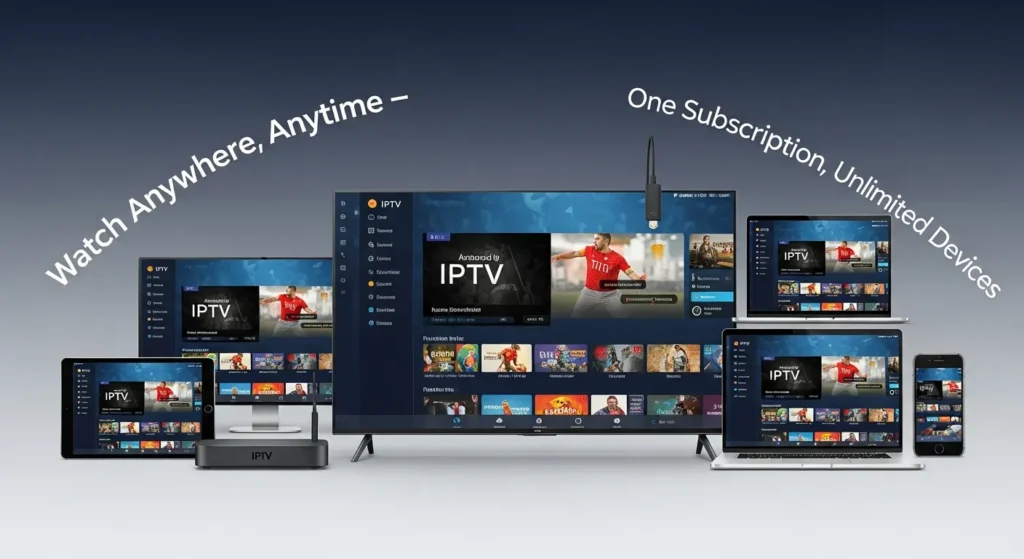
IPTV streaming works seamlessly across smart TVs, Android TV boxes, Amazon Firestick, MAG devices, smartphones, tablets, and computers. Start watching on your living room TV, continue on your tablet in the bedroom, and finish on your phone during your commute. This device-agnostic approach aligns perfectly with modern multi-screen lifestyles.
Superior Video Quality Options
While cable TV often maxes out at 1080p HD, advanced IPTV services deliver Full HD and 4K streaming options. The quality you experience depends on your internet speed and device capability, but the potential for stunning visual clarity exceeds traditional broadcasting methods. Additionally, IPTV middleware technology enables adaptive bitrate streaming—automatically adjusting quality to maintain smooth playback even when internet speeds fluctuate.
Minimal Equipment and Installation Requirements
Cable installations require technician visits, physical cables run through your home, and proprietary set-top boxes. IPTV streaming needs only an internet connection and compatible device—often hardware you already own. Setup typically takes minutes rather than scheduled appointments and installation fees.
Different Types of IPTV Streaming Services You Should Know
Not all IPTV streaming services operate identically. Understanding the different service types helps you select options matching your viewing preferences and requirements.
Live IPTV Streaming
Live IPTV streaming delivers real-time television broadcasts over internet connections, similar to traditional TV but with added flexibility. This includes news channels, sports events, entertainment programming, and specialty content broadcast as it happens. Live streaming remains the most popular IPTV category, particularly for sports enthusiasts who demand real-time access to games and matches.
Video on Demand (VOD)
VOD services provide extensive libraries of movies, TV series, documentaries, and other pre-recorded content available for streaming anytime. Unlike live TV’s scheduled programming, VOD operates entirely on-demand—browse, select, and watch instantly. Many IPTV providers combine both live channels and VOD libraries in comprehensive packages, offering the best of both worlds.
Catch-Up TV
Catch-up TV functionality bridges live and on-demand content. It automatically records live broadcasts, storing them temporarily (typically 7-14 days) so you can watch programs you missed. This feature proves invaluable for viewers with unpredictable schedules who want to follow specific shows without committing to fixed viewing times.
Time-Shifted Media
Time-shifted services let you pause, rewind, and fast-forward live TV broadcasts. Missed the beginning of a live game? Rewind to the start. Need to pause during a breaking news segment? The stream waits for you. This capability transforms rigid live broadcasting into flexible, user-controlled experiences.
Private vs. Public IPTV Services
This distinction matters significantly for both legality and quality. Public IPTV services operate openly with proper licensing agreements, transparent business operations, and legal content distribution rights. Examples include legitimate services from telecom providers and licensed streaming platforms.
Private IPTV services operate in gray or illegal territory, often lacking proper content licensing. While sometimes cheaper, these services risk sudden shutdowns, poor quality, legal consequences for users in some jurisdictions, and potential security vulnerabilities. Always prioritize legitimate, licensed IPTV providers to ensure reliability and legal compliance.
IPTV Streaming Requirements: Internet Speed, Devices & Apps
Achieving optimal IPTV streaming requires meeting specific technical requirements. Understanding these prerequisites prevents frustrating quality issues and ensures smooth viewing experiences.
Internet Speed Requirements
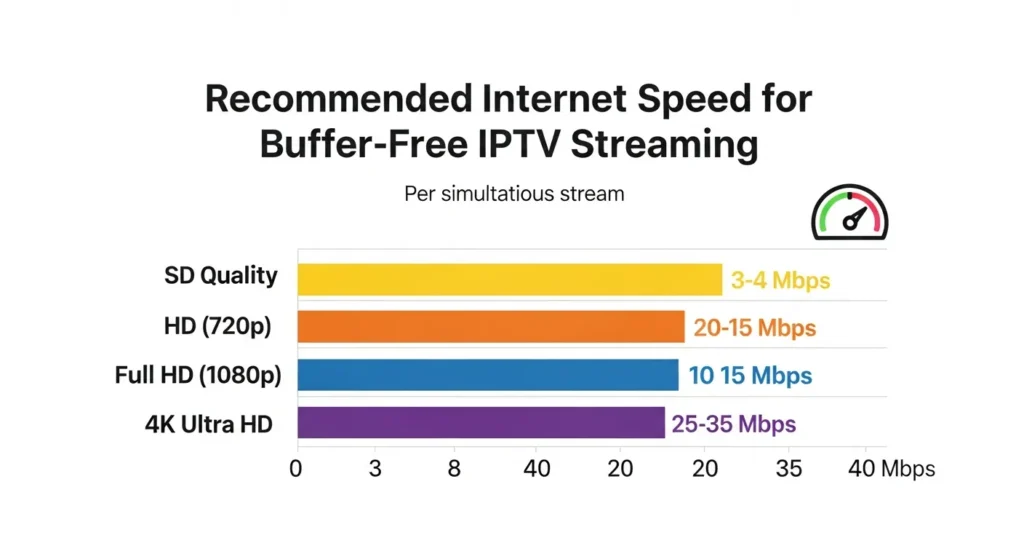
Internet speed represents the most critical factor determining IPTV streaming quality. Insufficient bandwidth creates buffering, freezing, and quality degradation. Here are recommended minimum speeds:
- Standard Definition (SD): 3-4 Mbps per stream
- High Definition (HD): 5-8 Mbps per stream
- Full HD (1080p): 10-15 Mbps per stream
- 4K Ultra HD: 25-35 Mbps per stream
These recommendations assume dedicated bandwidth. If multiple household members use internet simultaneously, calculate total required bandwidth accordingly. For example, a family streaming two HD channels while browsing and working from home needs minimum 30-40 Mbps internet service.
Connection stability matters as much as raw speed. A consistent 10 Mbps connection outperforms an inconsistent 50 Mbps connection with frequent speed drops. Fiber-optic and cable connections typically provide more stable speeds than DSL or satellite internet.
Compatible Devices
IPTV streaming works across numerous device categories:
- Smart TVs: Most modern smart TVs support IPTV apps directly. Samsung, LG, Sony, and Android TV-powered televisions offer excellent compatibility.
- Streaming Boxes: Android TV boxes, Amazon Firestick, Roku (limited IPTV support), and Apple TV provide dedicated streaming hardware.
- MAG Devices: MAG boxes are purpose-built for IPTV, offering optimized performance and simple interfaces. Popular models include MAG 322, MAG 324, and MAG 425A.
- Computers: Windows, Mac, and Linux systems all support IPTV through various media player applications.
- Mobile Devices: iOS and Android smartphones and tablets enable portable IPTV viewing.
Essential IPTV Apps and Players
The IPTV player or app serves as your interface to streaming content. Popular options include:
- IPTV Smarters Pro: User-friendly interface, supports multiple playlists, includes EPG (Electronic Program Guide) and VOD sections.
- Perfect Player: Highly customizable, excellent EPG support, lightweight and responsive.
- VLC Media Player: Free, open-source, universally compatible, though less specialized for IPTV.
- Kodi with IPTV Addons: Powerful media center software enabling extensive customization and integration.
- TiviMate: Premium IPTV player for Android, beautiful interface, advanced features including recording.
Network Stability Considerations
Beyond raw speed, network configuration affects IPTV streaming quality. Wired Ethernet connections significantly outperform Wi-Fi for stability and consistency. If Wi-Fi is necessary, position your router centrally, use 5GHz bands for less interference, and consider Wi-Fi extenders or mesh networks for larger homes.
Quality of Service (QoS) router settings can prioritize IPTV traffic over other internet activities, ensuring smooth streaming even when bandwidth is shared. Many modern routers include QoS features accessible through administration interfaces.
How to Choose a Reliable IPTV Streaming Provider
Selecting a reliable IPTV streaming provider determines whether you enjoy flawless viewing or endless frustration. These key factors separate excellent services from disappointing ones.
Channel Quality and Uptime
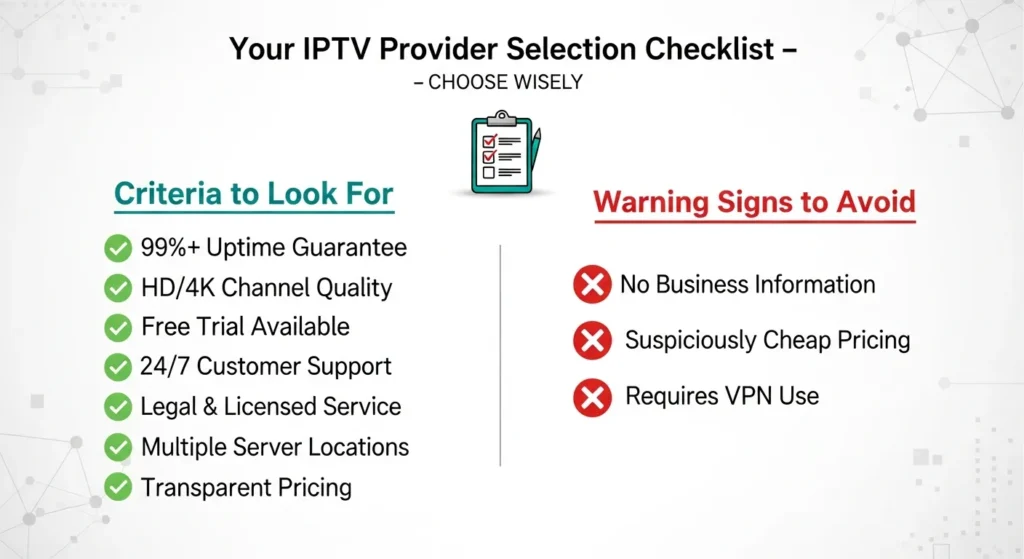
Premium providers maintain consistently high video quality and near-perfect uptime. Test any service during free trials, specifically during peak viewing hours when server loads are highest. Reliable providers maintain 99%+ uptime and offer backup servers that automatically activate if primary streams fail.
Check whether the provider offers HD and Full HD streams for major channels. Some budget services provide extensive channel lists but deliver only SD quality, defeating the purpose of modern IPTV streaming capabilities.
Server Stability and Infrastructure
Server infrastructure directly impacts your viewing experience. Leading providers invest in robust CDN networks, multiple server locations, and redundant systems preventing service interruptions. During evaluation, research provider reputation across independent review platforms and user forums. Consistent complaints about server crashes or slow loading indicate inadequate infrastructure.
Customer Support and Trial Availability
Legitimate, confident providers offer free trials or money-back guarantees allowing risk-free testing. Trial periods typically range from 24 hours to 7 days—sufficient time to evaluate service quality, channel selection, and compatibility with your devices.
Responsive customer support proves crucial when technical issues arise. Test support responsiveness before committing to long-term subscriptions. Send pre-purchase questions and gauge response time and helpfulness. Providers offering 24/7 support through multiple channels (live chat, email, ticketing systems) demonstrate commitment to customer satisfaction.
Legal Transparency and Licensing
Legal IPTV providers operate transparently with clear business information, terms of service, and privacy policies. They obtain proper licensing for content distribution and don’t shy away from questions about legality. Red flags include:
- Providers reluctant to disclose business locations or contact information
- Services offering “too good to be true” channel selections including premium content at suspiciously low prices
- Absence of terms of service or privacy policy documentation
- Providers encouraging VPN use to “avoid detection”
Subscription Pricing Models
Pricing varies significantly across providers. Monthly subscriptions typically range $10-30 for basic packages, $30-60 for premium services with extensive channels and VOD. Many providers offer discounts for longer commitments—quarterly, semi-annual, or annual subscriptions—reducing per-month costs.
Beware of extremely cheap services. Quality infrastructure, legitimate licensing, and reliable support require investment. Suspiciously inexpensive offerings often indicate unlicensed operations, poor quality, or services likely to disappear suddenly.
Common IPTV Streaming Problems (and How to Fix Them Fast)
Even with quality services and proper setup, occasional IPTV streaming problems occur. Understanding common issues and their solutions empowers you to restore smooth viewing quickly.
Buffering and Constant Loading
Buffering—the dreaded spinning circle—results from insufficient bandwidth reaching your device. Solutions include:
- Test your actual internet speed using speed test websites. If speeds fall below required thresholds, contact your ISP or upgrade your plan.
- Close bandwidth-consuming applications and devices. Cloud backups, software updates, and multiple simultaneous streams drain available bandwidth.
- Switch from Wi-Fi to wired Ethernet connections when possible. Ethernet eliminates wireless interference and provides stable speeds.
- Reduce stream quality in your IPTV app settings if bandwidth limitations persist. Watching SD or HD content beats not watching at all due to constant buffering in Full HD.
Channel Freezing and Stuttering
Freezing differs from buffering—video suddenly stops, audio continues, or both freeze together. Common causes and fixes include:
- Clear your IPTV app cache regularly. Accumulated cache files cause performance degradation. App settings typically include cache-clearing options.
- Update your IPTV player to the latest version. Developers constantly optimize performance and fix bugs affecting streaming stability.
- Try alternative streaming protocols if your provider offers options. HLS streaming generally provides better stability than RTMP for most home connections.
- Restart your streaming device completely. Simple reboots resolve surprising numbers of freezing issues by clearing memory and resetting network connections.
Audio Sync Problems
Audio and video falling out of sync creates jarring viewing experiences. Fixes include:
- Adjust audio sync settings within your IPTV player. Most quality players include audio delay/advance controls measured in milliseconds.
- Change output audio settings on your device. Switch between audio passthrough and processed audio modes to identify which works better with your setup.
- Update device firmware and IPTV app versions, as sync issues often stem from software bugs resolved in newer releases.
Channels Not Loading or EPG Problems
When channels won’t load or electronic program guides display incorrectly:
- Verify your M3U playlist URL is current. Providers occasionally update URLs, requiring manual updates in your app.
- Refresh EPG data within your IPTV app. Most players include refresh buttons for program guide updates.
- Check with your provider for service status updates. Occasional maintenance or technical issues on provider servers affect all users temporarily.
- Test channels individually. If only specific channels fail while others work, the problem lies with those particular streams rather than your setup.
VPN-Related Issues
While VPNs enhance privacy, they can introduce IPTV streaming complications:
- Choose VPN servers geographically close to your IPTV provider’s servers to minimize latency and speed reduction.
- Select VPN providers specifically optimized for streaming with minimal speed impact. Budget VPNs often severely throttle streaming performance.
- Try temporarily disabling VPN to determine if it’s causing issues. If streaming improves dramatically, consider alternative VPN services or servers.
IPTV Streaming Tips for Buffer-Free, High-Definition Performance
Achieving truly flawless IPTV streaming requires optimization beyond basic setup. These expert-level tips maximize performance and eliminate common quality issues.
Router Optimization for IPTV
Your router serves as the gateway for all IPTV streaming traffic. Optimize it properly:
- Enable Quality of Service (QoS) settings, prioritizing IPTV traffic over less time-sensitive activities like file downloads or software updates.
- Update router firmware regularly. Manufacturers release firmware updates addressing performance issues and security vulnerabilities.
- Change default Wi-Fi channels to less congested frequencies. Use Wi-Fi analyzer apps to identify least crowded channels in your area, reducing interference.
- Position your router centrally and elevated, avoiding walls, metal objects, and electronic devices that interfere with wireless signals.
Wired Connections vs. Wi-Fi
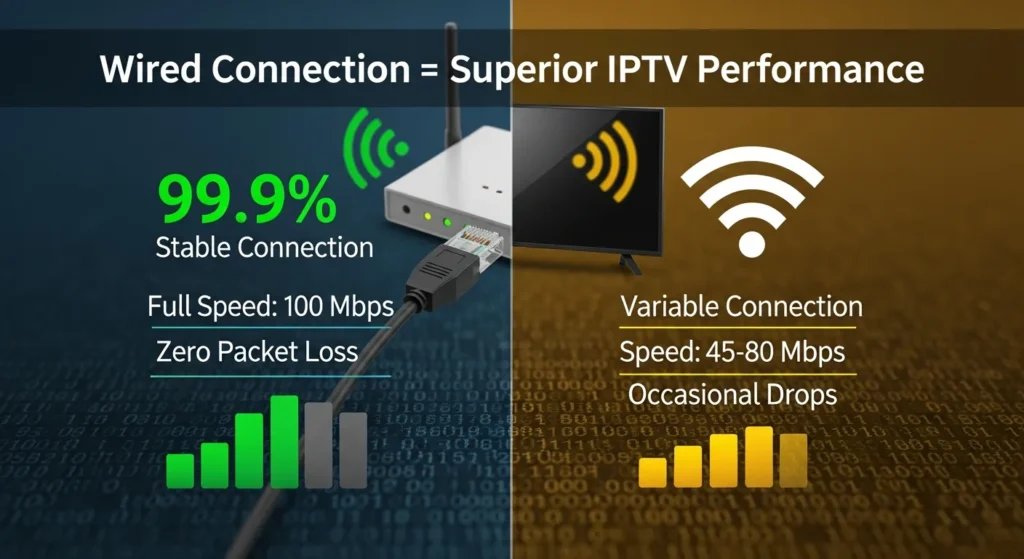
Ethernet connections deliver vastly superior stability compared to Wi-Fi. Even excellent Wi-Fi connections experience occasional interference, signal degradation, and speed fluctuations. Whenever possible:
- Connect primary streaming devices directly to your router via Ethernet cables.
- Use Powerline adapters if running Ethernet cables proves impractical. These devices transmit internet signals through existing electrical wiring, offering wired-connection benefits without extensive cabling.
- Reserve Wi-Fi for portable devices where wired connections aren’t feasible.
Strategic VPN Usage
VPNs serve legitimate purposes for IPTV streaming, primarily privacy protection and accessing geo-restricted content. However, indiscriminate VPN use causes unnecessary complications. Best practices include:
- Only use VPNs when genuinely necessary. If your IPTV service works fine without VPN, adding one introduces potential speed reduction and connection complexity.
- Select premium VPN services specifically optimized for streaming. Providers like ExpressVPN, NordVPN, and Surfshark maintain fast server networks minimizing speed impact.
- Choose server locations strategically. Connect to VPN servers in countries where your IPTV provider maintains infrastructure for optimal performance.
App and Cache Management
IPTV apps accumulate cache data over time, gradually degrading performance. Implement regular maintenance:
- Clear IPTV app cache weekly through app settings. This simple step prevents numerous playback issues.
- Restart your streaming device completely at least weekly. Full reboots clear memory, reset connections, and refresh system processes.
- Uninstall unused apps from streaming devices. Limited storage and processing resources affect overall device performance including IPTV playback.
Device-Specific Optimizations
Each device type benefits from specific optimizations:
- Android Boxes: Disable background apps and automatic updates during viewing hours. Install lightweight launchers instead of bloated factory interfaces.
- Firestick: Regularly clear cache through Settings > Applications > Manage Installed Applications. Disable Amazon tracking and data collection features consuming bandwidth and processing power.
- Smart TVs: Disable automatic content recognition and interactive features you don’t use. These background processes consume resources better dedicated to IPTV streaming.
Backup IPTV Providers
Serious viewers maintain backup IPTV subscriptions ensuring continued access during provider outages or technical issues. This redundancy proves invaluable during major sporting events or must-watch programming when any single service might experience overload.
Is IPTV Streaming Legal? What You Must Know Before Subscribing
IPTV streaming legality represents one of the most commonly misunderstood aspects of this technology. The situation requires nuanced understanding rather than simple yes/no answers.
Understanding the Legal Framework
IPTV technology itself is completely legal. Using internet protocols to deliver television content violates no laws. The legality question centers entirely on content licensing—whether IPTV providers have obtained proper rights to distribute the content they offer.
Legitimate IPTV services acquire broadcasting licenses from content owners, networks, and distributors before offering channels and programs to subscribers. These licensed services operate identically to traditional cable TV from a legal standpoint, merely using different delivery technology.
Unlicensed IPTV services, conversely, stream copyrighted content without permission or payment to rights holders. These operations infringe copyright laws and constitute illegal distribution regardless of attractive pricing or extensive channel selections.
Distinguishing Legal from Illegal Services
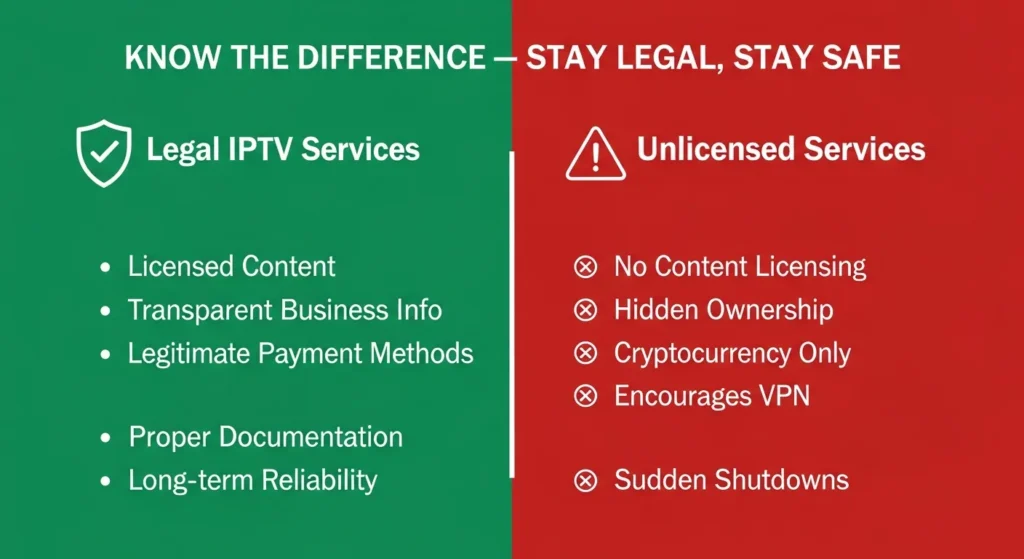
Several indicators help identify legitimate versus unlicensed IPTV providers:
Legal Services Typically:
- Operate transparently with clear business information and contact details
- Provide terms of service and privacy policy documentation
- Charge reasonable prices reflecting legitimate content licensing costs
- Offer channels from limited geographic regions where they’ve acquired rights
- Accept mainstream payment methods and provide official invoicing
Unlicensed Services Often:
- Hide business ownership and location information
- Offer suspiciously comprehensive channel selections from numerous countries at very low prices
- Encourage VPN use to “avoid detection” or bypass geographic restrictions
- Accept only cryptocurrency or other untraceable payment methods
- Disappear suddenly without warning or refunds
Regional Legal Considerations
IPTV streaming legality varies by jurisdiction. In most developed nations including the United States, European Union countries, Canada, and Australia, using unlicensed IPTV services violates copyright laws. Enforcement primarily targets service operators rather than individual subscribers, though legal frameworks exist for prosecuting users in many regions.
Some countries maintain more relaxed enforcement or ambiguous regulations. However, relying on lax enforcement proves risky. Legal frameworks can change rapidly, and authorities increasingly prioritize intellectual property protection as streaming piracy grows.
User Responsibility and Risk Assessment
Ultimately, users bear responsibility for ensuring their IPTV streaming services operate legally. “I didn’t know it was illegal” rarely constitutes effective legal defense. Before subscribing to any IPTV service:
- Research the provider thoroughly through independent sources
- Verify the provider operates legally in your jurisdiction
- Question offerings that seem too good to be true
- Prioritize licensed services even if slightly more expensive
Beyond legal concerns, unlicensed services present practical risks including sudden service termination, poor quality, security vulnerabilities, and absence of customer support when problems arise.
Final Verdict: Is IPTV Streaming Worth It in 2025?
After examining every aspect of IPTV streaming—from technical fundamentals to legal considerations—the verdict becomes clear: IPTV streaming represents one of the most compelling developments in television entertainment, offering unmatched flexibility, cost savings, and content variety compared to traditional cable and satellite services.
The advantages overwhelmingly favor IPTV adoption for most viewers. Dramatic cost reductions, typically 40-60% compared to cable TV, immediately impact household budgets. On-demand flexibility transforms rigid broadcasting schedules into personalized viewing experiences accommodating modern lifestyles. Global content access breaks down geographic barriers, delivering international channels and programming previously inaccessible.
However, success requires thoughtful implementation. Choosing licensed, reputable IPTV providers ensures legal compliance and service reliability. Meeting technical requirements—adequate internet speed, compatible devices, and optimized network configurations—determines whether you experience flawless or frustrating streaming. Understanding troubleshooting basics empowers you to resolve common issues quickly rather than enduring poor quality.
For cord-cutters tired of expensive cable bills, IPTV streaming delivers comprehensive channel selections at fraction of traditional costs. For international viewers seeking content from home countries, IPTV provides access cable companies cannot match. For tech-savvy households embracing smart home technology, IPTV integrates seamlessly across multiple devices and viewing locations.
The IPTV revolution isn’t coming—it’s already here. Market momentum toward internet-based television continues accelerating as infrastructure improves and viewer expectations evolve. Traditional broadcasting faces inexorable decline as IPTV streaming advantages become increasingly undeniable.
FAQs About IPTV Streaming
Q1: What internet speed is best for IPTV streaming?
A1: A stable 10 Mbps connection suffices for single HD streams, while 25 Mbps or more is recommended for Full HD and 4K streaming. Account for multiple simultaneous devices when calculating required bandwidth. Connection stability matters as much as raw speed—consistent 15 Mbps outperforms fluctuating 50 Mbps for IPTV purposes.
Q2: Can I use IPTV streaming on multiple devices?
A2: Yes, many IPTV providers support multi-device or multi-connection plans. Single-connection subscriptions limit viewing to one device at a time, while premium plans allow 2-5 simultaneous connections. This flexibility enables household members to watch different content concurrently across various devices.
Q3: Is IPTV streaming better than cable TV?
A3: IPTV streaming offers greater flexibility, significantly lower costs, broader content options, and multi-device compatibility compared to traditional cable TV. Cable maintains advantages in simplicity and zero internet bandwidth consumption, but for most viewers, IPTV benefits outweigh these limited cable advantages substantially.
Q4: Do I need a VPN for IPTV streaming?
A4: VPNs aren’t strictly necessary for legal IPTV services. However, VPNs provide valuable privacy protection and enable access to geo-restricted content. If using VPN with IPTV, choose premium services optimized for streaming to minimize speed impact. Never use VPNs to mask illegal IPTV service usage.
Q5: What’s the difference between IPTV and OTT platforms like Netflix?
A5: IPTV streaming delivers live TV channels, catch-up TV, and VOD through managed networks often requiring subscriptions. OTT platforms like Netflix provide exclusively on-demand content over public internet without live channel broadcasts. IPTV offers more comprehensive television experiences including real-time programming, while OTT focuses on curated VOD libraries.
Q6: Can IPTV streaming work without internet?
A6: No, IPTV streaming requires active internet connectivity since it delivers content through internet protocols. Unlike cable or satellite TV that function independently of internet, IPTV depends entirely on your internet connection. This dependence means internet outages prevent IPTV access, though stable connections provide reliability comparable to traditional TV.